
Introduction
Starting an Start an Online Business with low risk means testing demand first, minimizing upfront costs, and building step by step, instead of investing heavily before proving that people are willing to pay.
Many beginners dream of starting an online business but hesitate because of fear—fear of losing money, choosing the wrong idea, or failing publicly. These fears are valid. Most online business failures happen not because ideas are bad, but because people take big risks too early. This guide explains how beginners can start an online business safely, validate ideas before investing, and grow gradually without gambling time or money.
Table of Contents
What “Low Risk” Really Means in Online Business
Why Most Online Businesses Fail Early
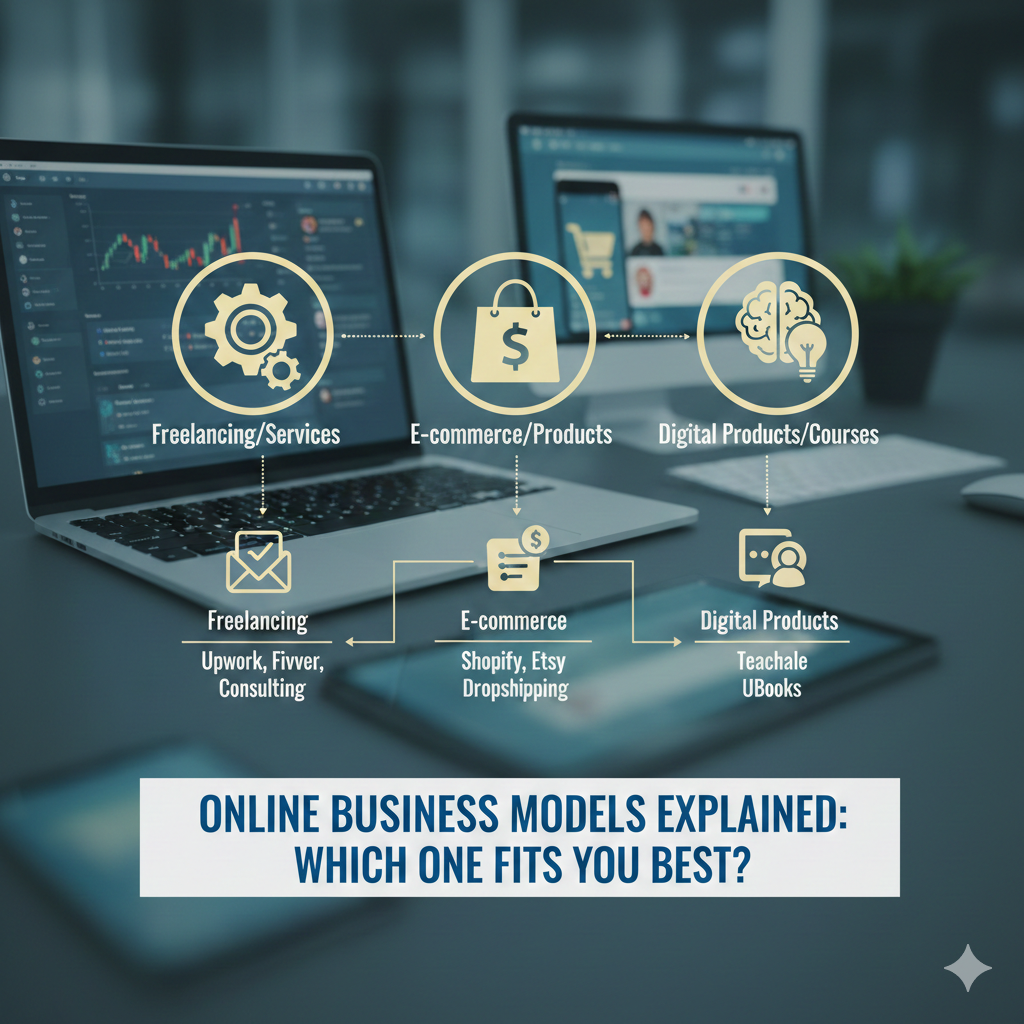
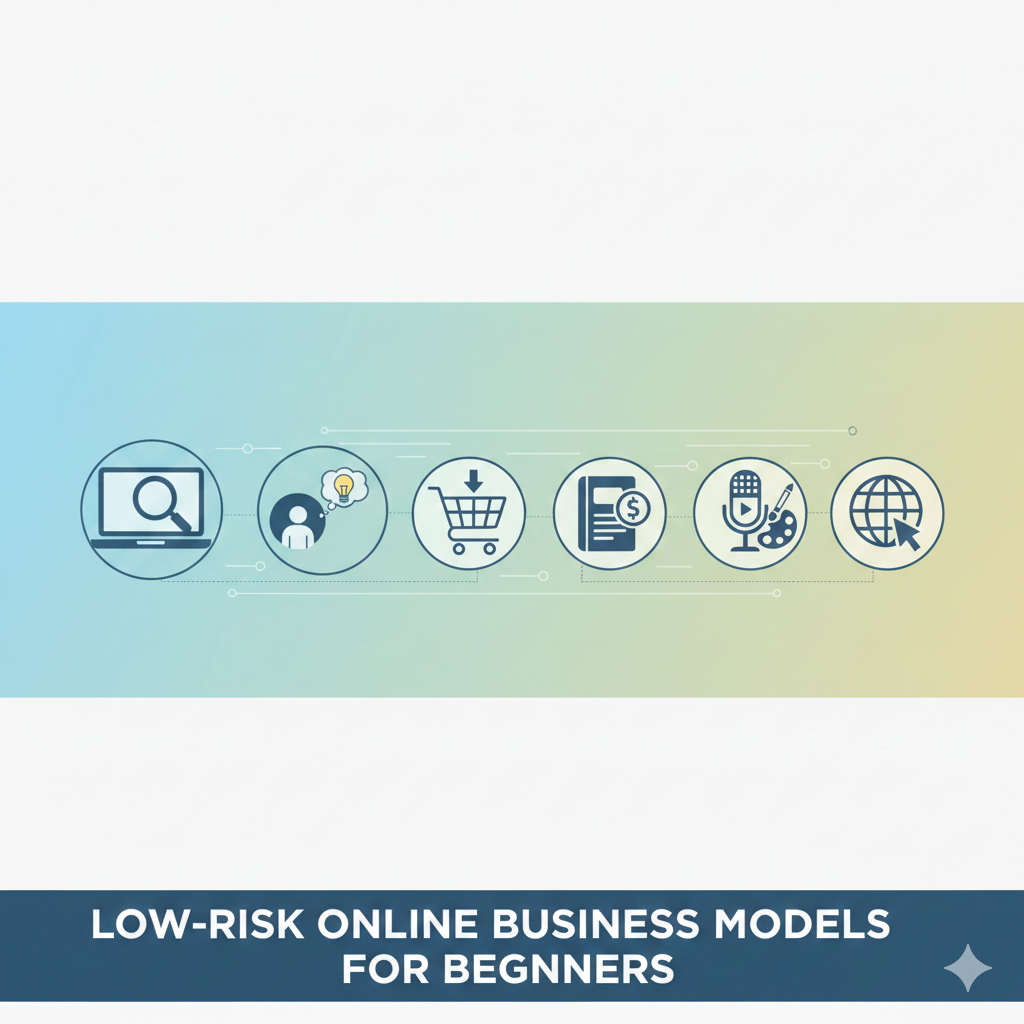
Low-Risk Online Business Models for Beginners
Comparison Table: Risk vs Reward
Common Beginner Mistakes and Fixes
Information Gain: Validation Before Investment
Real-World Scenario: Testing Before Building
Tools That Reduce Business Risk
FAQs (People Also Ask)
Conclusion
What “Low Risk” Really Means in Online Business
Low risk does not mean no effort or guaranteed success.
In online business, low risk means:
Minimal upfront cost
Ability to test before scaling
Easy exit if the idea fails
Skills or assets gained even if income is slow
A low-risk business protects learning value, not just money.
Why Most Online Businesses Fail Early
Most online businesses fail because beginners:
Invest before validating demand
Build full websites before first customers
Copy ideas without understanding the market
Expect fast profits
From practical observation, failure usually happens before the first sale, not after success.
Low-Risk Online Business Models for Beginners
Content-Based Online Business
This includes blogs, educational content, or niche information sites.
Why it’s low risk:
Very low startup cost
Can test topics before monetizing
Builds long-term assets
youtube link
https://www.youtube.com/watch?v=U9hZkz8pZKQ
(How content businesses grow step by step)
Service-First Online Business
Sell a service before building products.
Examples:
Freelance services
Consulting or coaching
Done-for-you solutions
This model validates demand before scaling.
Digital Products After Validation
Create digital products only after:
Repeated questions from users
Clear demand signals
Existing audience interest
This avoids building products nobody wants.
Audience-First Business Models
Build trust first, monetize later.
Examples:
Newsletters
Communities
Educational platforms
The asset here is attention and trust, not inventory.
Comparison Table: Risk vs Reward
| Business Model | Startup Cost | Risk Level | Time to Results | Long-Term Potential |
| Content Business | Very Low | Low | Slow | Very High |
| Service-First | Low | Low | Fast | High |
| Digital Products | Medium | Medium | Medium | High |
| E-commerce (No Validation) | High | High | Medium | High |
Common Beginner Mistakes and Fixes
Building Too Much Too Early
Fix: Start with the smallest test possible.
Spending Before Earning
Fix: Delay tools and upgrades until revenue appears.
Ignoring Feedback
Fix: Let users shape what you build next.
[Expert Warning]
If an online business idea requires large upfront investment before testing demand, it is not beginner-friendly.
Information Gain: Validation Before Investment (SERP Gap)
Most guides explain how to build an online business—but skip how to validate it.
Validation includes:
People asking similar questions
Willingness to pay for small offers
Repeated interest from different users
From real experience, businesses that validate before building survive longer—even if growth is slow. This validation-first mindset is rarely emphasized in top SERP content.
Real-World Scenario: Testing Before Building
Two beginners start online businesses.
One builds a full website, logo, and tools—no sales.
The other offers a simple service, gets clients, then builds systems.
In real situations, testing before building saves months of wasted effort.
[Pro Tip]
Your first goal is not profit—it’s proof that someone will pay.

Tools That Reduce Business Risk
Free website builders or CMS platforms
Analytics and keyword research tools
Simple landing pages
Feedback and survey tools
Always start with free or low-cost tools.
FAQs
Q1: Is it possible to start an online business with low risk?
Yes, by testing ideas before investing heavily.
Q2: What is the safest online business for beginners?
Content-based or service-first models.
Q3: Do I need money to start an online business?
Very little, if you start small and validate first.
Q4: How long before an online business earns money?
Usually a few months, depending on the model.
Q5: Why do most online businesses fail?
They skip validation and expect fast results.
Q6: Can a low-risk business become high income?
Yes, with time, systems, and consistency.
Conclusion
Starting an online business with low risk is not about avoiding effort—it’s about avoiding unnecessary mistakes. Beginners succeed when they validate first, spend later, and grow gradually. When learning is protected and risk is controlled, even slow progress leads to strong, sustainable online businesses. Start small, prove demand, and let growth follow naturally.
Internal Link
Online Business Ideas That Actually Work in the Long Run – earnfuel.com