
Introduction
Validating an online business idea means proving real demand before building, by testing interest, willingness to pay, and repeat problems instead of guessing or copying what others are doing.
Most online business failures don’t happen because the idea was bad—they happen because validation was skipped. Beginners often spend weeks building websites, logos, and systems only to discover nobody wants what they created. This article explains how to validate an online business idea step by step, what real demand signals look like, how to test ideas cheaply, and how to avoid false validation that creates confidence without customers.
Table of Contents
What Business Validation Really Means
Why Most People Validate the Wrong Way
How to Validate an Online Business Idea
Comparison Table: Strong vs Weak Validation
Common Beginner Mistakes and Fixes
Information Gain: Willingness to Pay Beats Interest
Real-World Scenario: Validation in Practice
Tools That Help With Validation
FAQs (People Also Ask)
Conclusion
What Business Validation Really Means
image size must be 702 by 354 px ,realsitc,professional and title must be in bottom
Business validation answers one simple question:
Will someone pay for this solution?
Validation is not:
Likes or comments
Friends saying “good idea”
Traffic without action
Real validation involves behavior, not opinions.
In practical terms, validation reduces risk by ensuring effort goes toward problems people already care about.
Why Most People Validate the Wrong Way
Beginners often confuse attention with demand.
Common false validation signals:
Social media engagement
High views with no conversions
Compliments without commitment
These signals feel encouraging but don’t prove a business can survive.
From real experience, the strongest validation often looks quiet—small payments, repeat questions, or early customers asking for more.

How to Validate an Online Business Idea
Step 1: Identify a Repeated Problem
A valid business idea solves a problem people mention repeatedly.
Good signs include:
Similar questions asked in different places
Frustration or urgency in wording
People already paying for partial solutions
Repetition matters more than popularity.
Step 2: Test With a Small Offer
Before building a full product, test with:
A simple service
A small digital guide
A basic consultation
youtube video
https://www.youtube.com/watch?v=U9hZkz8pZKQ
(How creators test ideas before building products)
If people pay even a small amount, validation is strong.
Step 3: Measure Willingness to Pay
Ask directly—but carefully.
Validation questions focus on:
What they would pay to fix the problem
What they’ve tried already
What didn’t work
Money conversations reveal seriousness.
Step 4: Look for Repeat Interest
Strong ideas attract:
Follow-up questions
Requests for expansion
Referrals or sharing
One buyer is a test. Multiple buyers confirm demand.
Comparison Table: Strong vs Weak Validation
| Signal | Weak Validation | Strong Validation |
| Feedback | Compliments | Payments |
| Interest | Likes/views | Sign-ups |
| Questions | General | Specific & urgent |
| Effort | High, no return | Small, positive return |
| Confidence | Emotional | Evidence-based |
Common Beginner Mistakes and Fixes
Building Before Testing
Fix: Test the smallest possible version first.
Asking Friends Only
Fix: Validate with real target users.
Ignoring Negative Feedback
Fix: Use objections to refine the idea.
[Expert Warning]
If validation requires you to explain the idea repeatedly, the market may not need it.
Information Gain: Willingness to Pay Beats Interest (SERP Gap)
Most validation guides focus on surveys and engagement. That’s incomplete.
From real-world patterns:
Interest shows curiosity
Payment shows commitment
People say yes to ideas all the time. They pay only when the problem matters enough. This distinction is rarely emphasized in top-ranking validation articles but explains why many “validated” ideas still fail.
Real-World Scenario: Validation in Practice
Two beginners have business ideas.
One builds a full site based on interest alone—no sales.
The other offers a simple paid solution—gets three customers.
The second beginner now knows:
The problem is real
Pricing is possible
Expansion is justified
Validation saved months of effort.
[Pro Tip]
If someone pays once, they may pay again—focus on repeat demand.
Tools That Help With Validation
Simple landing pages
Email sign-up forms
Payment links for small offers
Keyword and trend tools
Feedback and survey tools
Start with free or low-cost tools to keep risk minimal.
FAQs
Q1: What is online business validation?
Testing demand before building a full business.
Q2: Do I need a website to validate an idea?
No. Simple offers work better early.
Q3: How long does validation take?
Often days or weeks, not months.
Q4: Is traffic enough to validate an idea?
No. Payment matters more than traffic.
Q5: Can validation fail?
Yes—and that’s success because it saves time.
Q6: Should I quit if validation fails?
Refine the idea or test a different problem.
Conclusion
Validating an online business idea is not optional—it’s the foundation of low-risk success. When beginners test demand before building, they avoid wasted effort and gain real confidence backed by evidence. Focus on willingness to pay, start small, and let validation guide what you build next. Proof beats passion every time.
Internal link
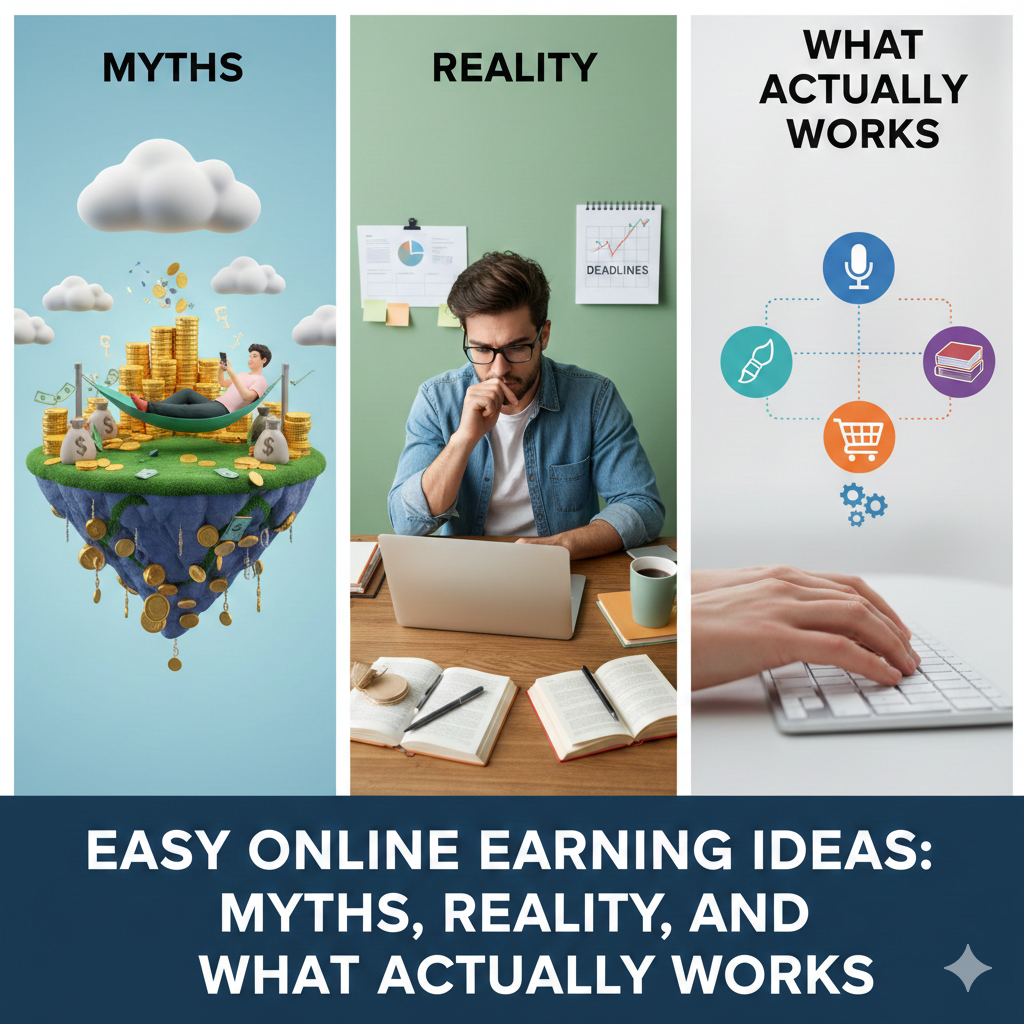
Easy Online Earning Ideas: Myths, Reality, and What Actually Works – earnfuel.com