
Introduction
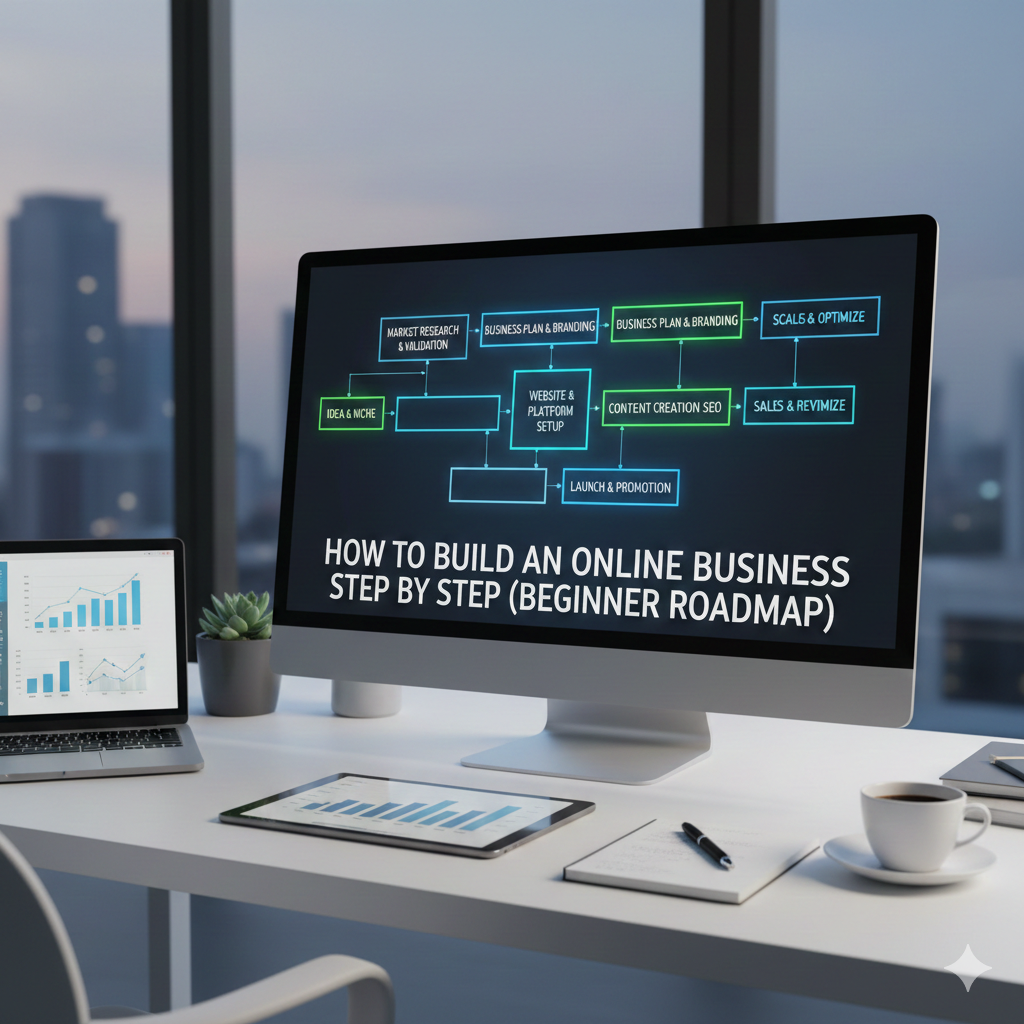
Building an online business step by step means starting with validation, launching small, improving based on feedback, and scaling only after proof, instead of trying to build everything at once. Build an Online
Most beginners fail not because online business is hard, but because they try to do too much too early. They build websites before customers, invest in tools before revenue, and plan for scale before proof. This article gives a realistic, beginner-friendly roadmap for building an online business step by step, focusing on what to do first, what to delay, and how to grow safely without burnout or wasted effort.
Table of Contents
- Why a Step-by-Step Approach Matters
- Step 1: Choose a Problem, Not an Idea
- Step 2: Validate Before You Build
- Step 3: Launch the Simplest Version
- Step 4: Get Your First Customers
- Step 5: Improve and Systemize
- Comparison Table: Rushed vs Step-by-Step Businesses
- Information Gain: Progress Comes From Iteration
- Real-World Scenario: Slow Build, Strong Results
- FAQs
- Conclusion
Why a Step-by-Step Approach Matters
Online business success is sequential, not simultaneous.
Beginners often try to:
- Build branding, content, products, and systems at once
- Copy advanced businesses without context
- Skip foundational steps
A step-by-step approach reduces risk, preserves motivation, and ensures every step is backed by evidence—not assumptions.
Step 1: Choose a Problem, Not an Idea
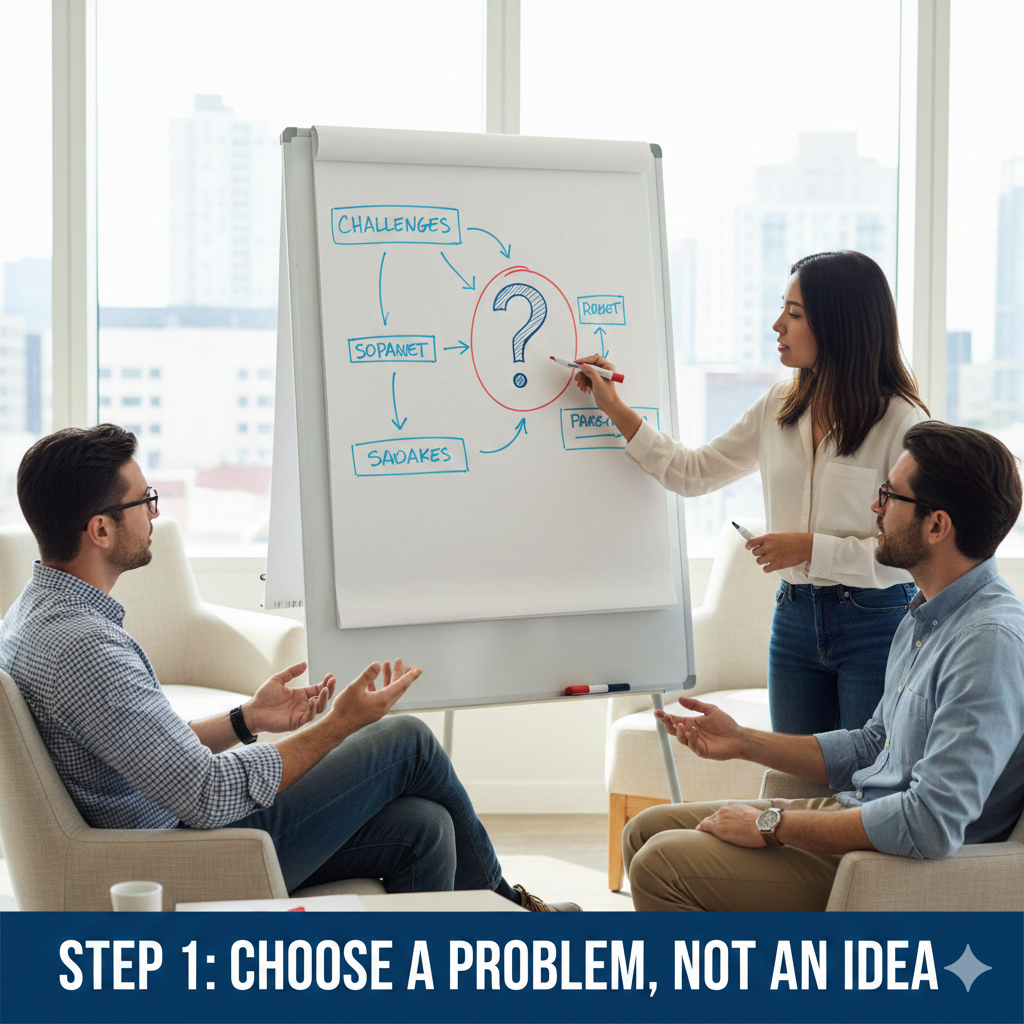
Strong businesses start with problems people already care about.
Good problems are:
- Repeated
- Costly or frustrating
- Already being discussed
Avoid starting with:
- “I want to sell X”
- “This looks profitable”
Start with:
- “People struggle with this repeatedly”
Step 2: Validate Before You Build
Before building a website or product, validate with:
- A small paid offer
- A simple service
- A landing page with sign-ups
youtube
https://www.youtube.com/watch?v=U9hZkz8pZKQ
(How to validate ideas before building online businesses)
Validation confirms that effort will not be wasted.
Step 3: Launch the Simplest Version
Your first version should be:
- Incomplete but usable
- Focused on one outcome
- Easy to improve
This could be:
- A basic service
- A simple digital product
- A minimal content platform
Perfection slows learning.
Step 4: Get Your First Customers
Early customers are more important than early profit.
Focus on:
- Delivering real value
- Collecting feedback
- Understanding objections
First customers help shape what the business becomes.
Step 5: Improve and Systemize
Once demand is proven:
- Improve delivery
- Document processes
- Add simple systems
Systemization turns effort into leverage.
Comparison Table: Rushed vs Step-by-Step Businesses
| Factor | Rushed Build | Step-by-Step Build |
| Risk | High | Low |
| Confidence | Assumed | Evidence-based |
| Cost | High upfront | Minimal early |
| Learning | Slow | Fast |
| Longevity | Low | High |
Information Gain: Progress Comes From Iteration (SERP Gap)
Most guides focus on launching. Real progress comes from iteration.
Iteration means:
- Testing small changes
- Learning from feedback
- Improving what already works
Businesses that iterate outperform those that chase “perfect launches.” This reality is rarely emphasized in top-ranking articles.
Real-World Scenario: Slow Build, Strong Results
Two beginners start online businesses.
One builds everything in three months—no sales.
The other validates, launches small, improves weekly—steady growth.
In practice, slow, validated progress beats rushed execution.
[Pro Tip]
Your first version’s job is not to impress—it’s to teach you.
FAQs
Q1: How long does it take to build an online business?
Usually months, not weeks.
Q2: Do I need a website at the start?
No. Validation comes first.
Q3: Should I invest money early?
Only after proof of demand.
Q4: What if my first idea fails?
That’s learning, not failure.
Q5: Can beginners really build businesses?
Yes, with patience and structure.
Q6: When should I scale?
After repeat customers and demand.
Conclusion
Building an online business step by step is the safest path to long-term success. When beginners focus on problems, validate early, launch simply, and improve continuously, progress becomes predictable. Skip shortcuts, respect the sequence, and let learning guide growth. Slow builds strong—always.
Internal Link
Online Business Models Explained: Which One Fits You Best? – earnfuel.com