Introduction
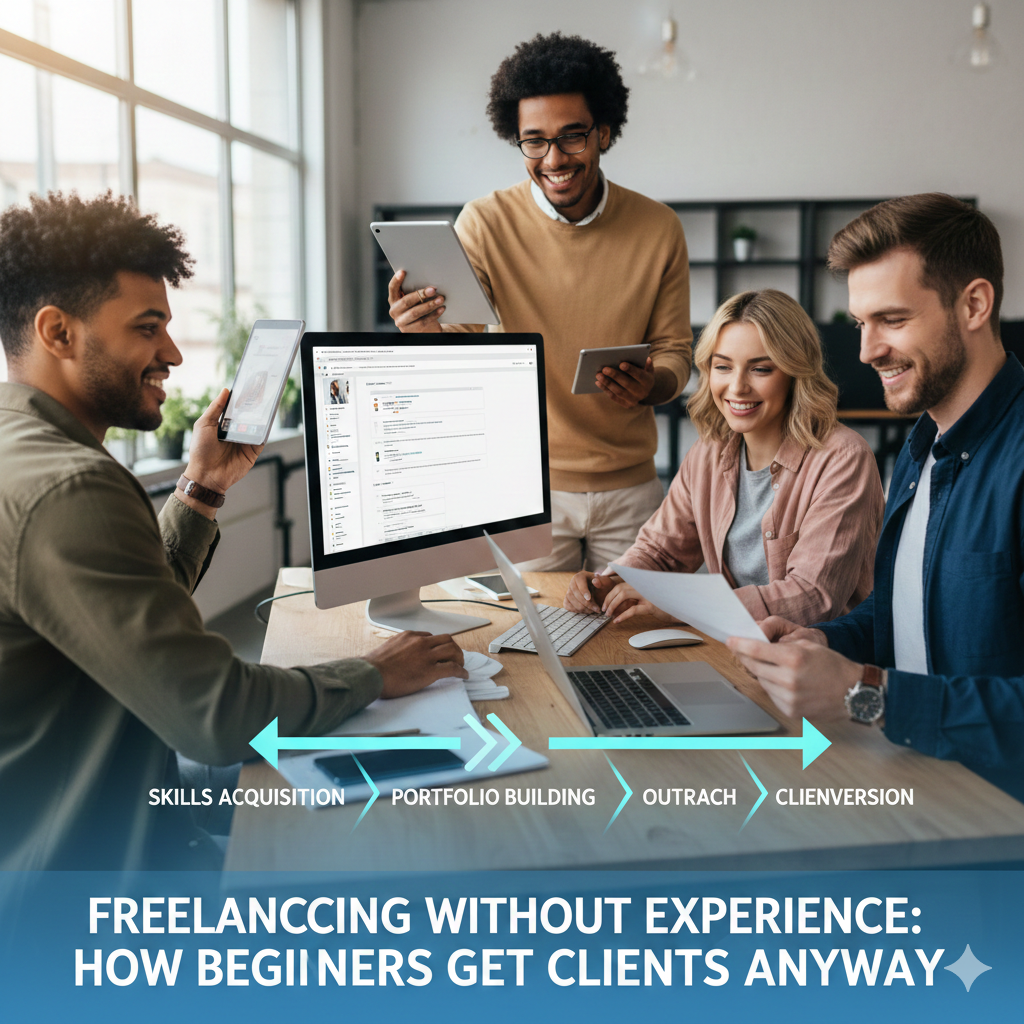
You can start freelancing online with no experience by offering simple, in-demand services, building sample work, and focusing on communication and reliability instead of expertise. Many successful freelancers begin with basic skills and grow over time.
One of the biggest myths about freelancing is that you need years of experience to get started. In reality, clients often care more about clear communication, problem-solving, and consistency than formal credentials. This article explains how beginners can start freelancing online with no experience, what realistic first steps look like, how to get initial clients, and how to grow without falling for shortcuts or scams.
Table of Contents
- What “No Experience” Really Means in Freelancing
- Why Clients Hire Beginners
- How to Start Freelancing Online With No Experience
- Comparison Table: Experience vs Client Expectations
- Common Beginner Mistakes and Fixes
- Information Gain: Proof Beats Experience
- Real-World Scenario: First Client Without Experience
- Tools That Help Beginners Get Started
- FAQs (People Also Ask)
- Conclusion
What “No Experience” Really Means in Freelancing
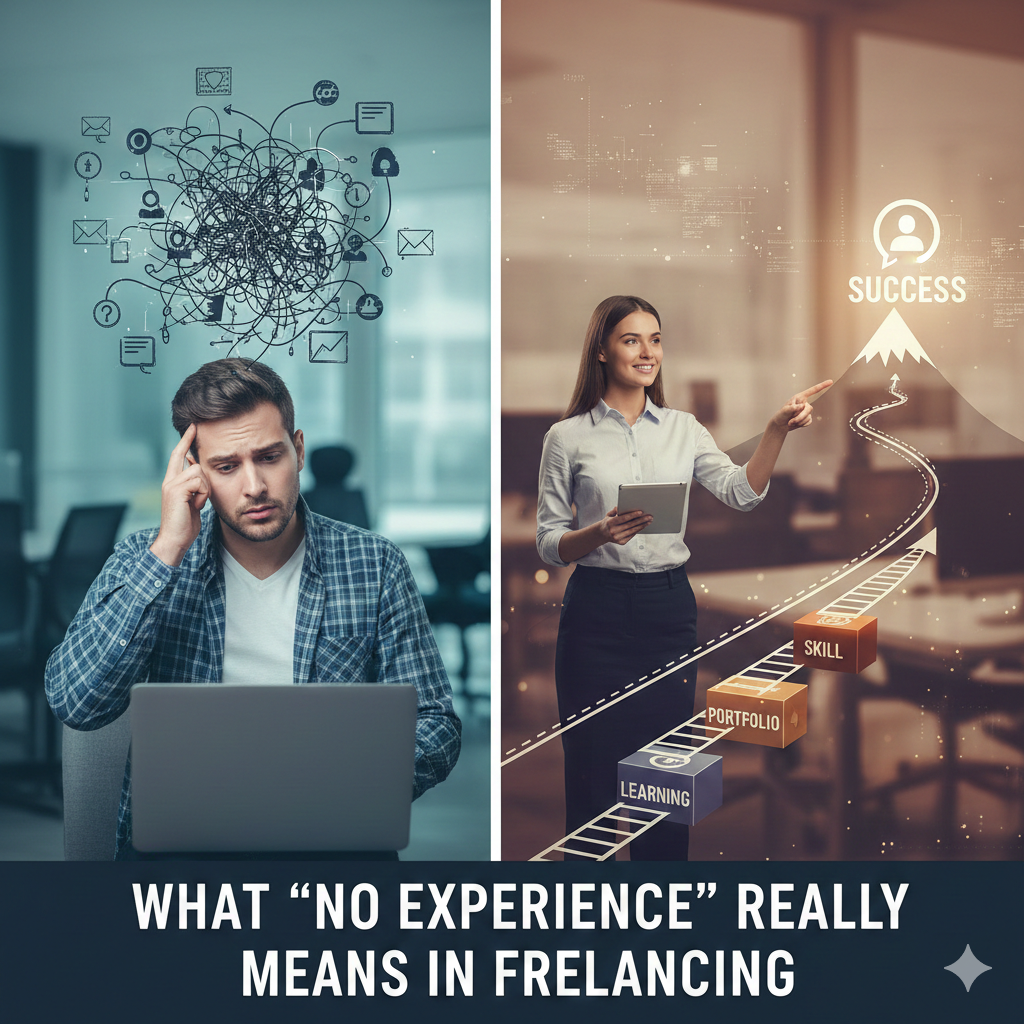
No experience does not mean no ability.
In freelancing, “no experience” usually means:
- No paid client history
- No formal job background
- No professional portfolio
Clients understand this. What they look for instead is confidence, clarity, and effort. Many clients prefer beginners because they are motivated, flexible, and willing to follow instructions carefully.
Why Clients Hire Beginners
Clients hire beginners for practical reasons:
- Lower initial cost
- Fresh perspective
- High responsiveness
- Willingness to learn
From real-world patterns, many long-term freelancer–client relationships start when a beginner delivers small tasks reliably.
How to Start Freelancing Online With No Experience
Choose Beginner-Friendly Services
Start with services that require logic, effort, or organization—not advanced expertise.
Examples:
- Data research
- Virtual assistance
- Basic writing
- Social media support
- Simple design tasks
Build Sample Work (Even Without Clients)
You can create samples by:
- Practicing on imaginary projects
- Improving existing content
- Helping friends or small businesses
youtube link
https://www.youtube.com/watch?v=Yz5GzFz2H1E
(How beginners start freelancing without experience)
Samples show ability, not employment history.
Write Clear, Honest Proposals

Avoid pretending to be an expert.
Good proposals:
- Acknowledge beginner status briefly
- Focus on solving the client’s problem
- Explain how you will approach the task
Honesty builds trust faster than exaggeration.
Start With Small Projects
Small projects reduce risk for both you and the client.
They help you:
- Gain feedback
- Improve workflow
- Build confidence
Comparison Table: Experience vs Client Expectations
| Client Need | Experience Required | What Matters More |
| Clear communication | Low | Very High |
| Following instructions | Low | Very High |
| Meeting deadlines | Low | Critical |
| Advanced expertise | Medium–High | Contextual |
Common Beginner Mistakes and Fixes
Pretending to Be an Expert
Fix: Be honest and confident about learning.
Applying to Everything
Fix: Target jobs matching your skill level.
Copy-Pasting Proposals
Fix: Write short, customized responses.
[Expert Warning]
If a freelancing opportunity asks for fees, deposits, or paid training, it is not legitimate freelancing.
Information Gain: Proof Beats Experience (SERP Gap)
Most articles emphasize “experience” as the barrier. In freelancing, proof matters more than experience.
Proof includes:
- Samples
- Clear explanations
- Past practice work
- Responsiveness
Clients often choose a beginner who explains the solution clearly over an experienced freelancer who sends a generic proposal. This reality is rarely highlighted in top SERP articles.
Real-World Scenario: First Client Without Experience
Imagine a beginner applying for a small data research task.
Instead of claiming expertise, they explain:
- How they will find accurate data
- How results will be organized
- When delivery will happen
The client hires them because the plan feels clear and low-risk. This scenario happens far more often than beginners expect.
[Pro Tip]
Clarity reduces client risk. The less risky you sound, the more likely you are to be hired.
Tools That Help Beginners Get Started
- Free learning platforms
- Simple document tools
- Basic portfolio builders
- Time tracking apps
Use free tools first to avoid unnecessary costs.
FAQs
Q1: Can I start freelancing with no experience?
Yes. Many freelancers start with no paid experience.
Q2: What is the easiest freelancing job for beginners?
Data research, virtual assistance, and basic writing.
Q3: How do beginners get their first client?
By applying to small jobs with clear proposals.
Q4: Do clients trust beginners?
Yes, when communication is clear and honest.
Q5: How long does it take to get first freelancing job?
Usually 2–4 weeks with consistent effort.
Q6: Should beginners work for free?
Occasionally for samples, but not long-term.
Conclusion
Starting freelancing online with no experience is realistic when expectations are honest. Beginners succeed by choosing simple services, creating proof through samples, and communicating clearly. Freelancing rewards reliability more than credentials. Start small, focus on clarity, and let experience grow naturally with each project.
Internal Link
Best Freelancing Skills to Learn for High-Paying Work – earnfuel.com