
Introduction
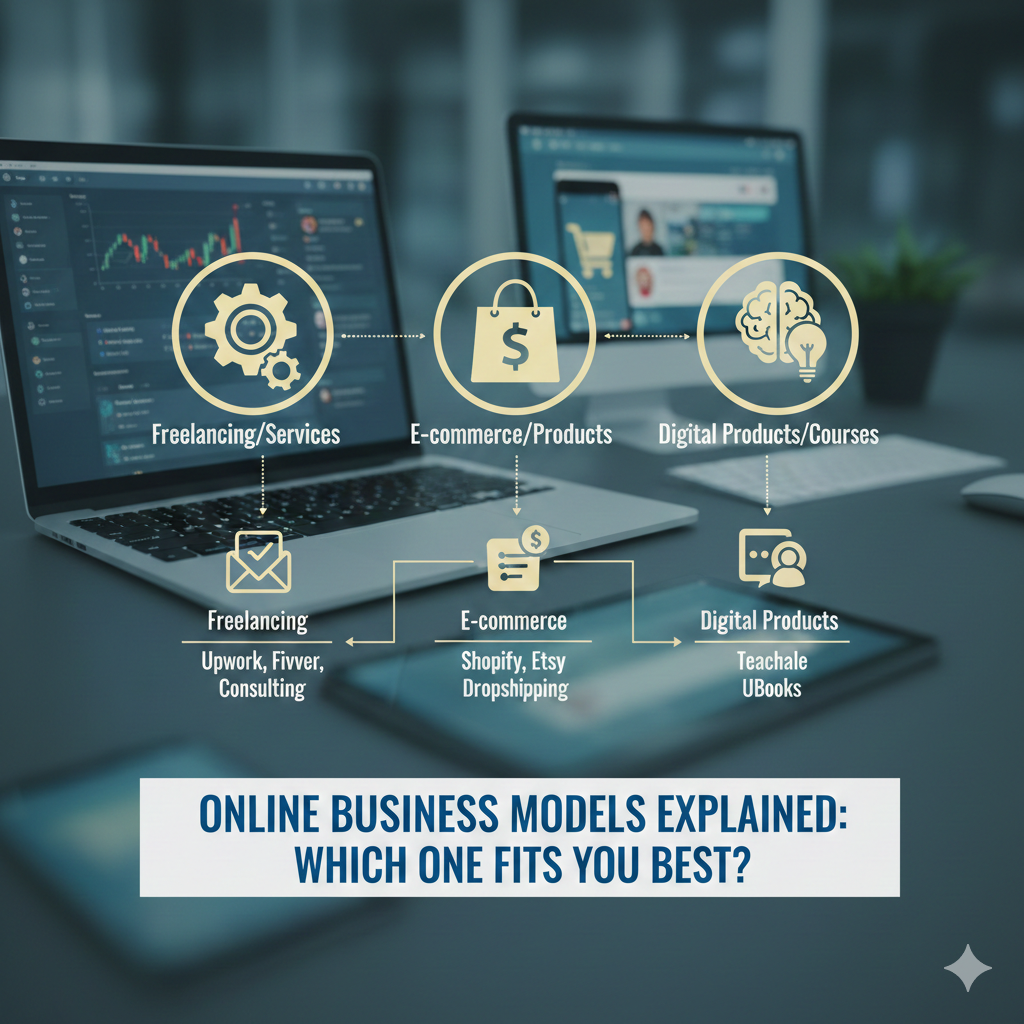
Online business models explain how a business creates value, earns money, and scales, such as content-based models, services, digital products, subscriptions, or marketplaces. Choosing the right model matters more than choosing the perfect idea.
Many beginners fail not because their ideas are bad, but because they choose the wrong business model for their personality, skills, or resources. Some models demand patience, others demand sales ability, and some require systems and delegation. This article breaks down the main online business models, explains how each one actually works in real life, and helps beginners choose a model that fits their strengths instead of fighting against them.
Table of Contents
What an Online Business Model Really Is
Why Choosing the Right Model Matters
Major Online Business Models Explained
Comparison Table: Models vs Fit
Common Beginner Mistakes and Fixes
Information Gain: Model–Person Fit Beats Idea Quality
Real-World Scenario: Same Idea, Different Models
Tools That Support Different Business Models
FAQs (People Also Ask)
Conclusion
What an Online Business Model Really Is

An online business model defines:
Who you help
What you offer
How you get paid
How the business grows
Two people can sell the same solution and get very different results because they use different models. The model shapes workload, income stability, and growth speed.
Why Choosing the Right Model Matters
Each business model comes with trade-offs.
Some require:
Constant client interaction
Long-term content creation
Customer support and systems
Marketing and sales skills
From practical observation, businesses fail when people choose models that conflict with their habits or tolerance for uncertainty, not because the market is bad.
Major Online Business Models Explained
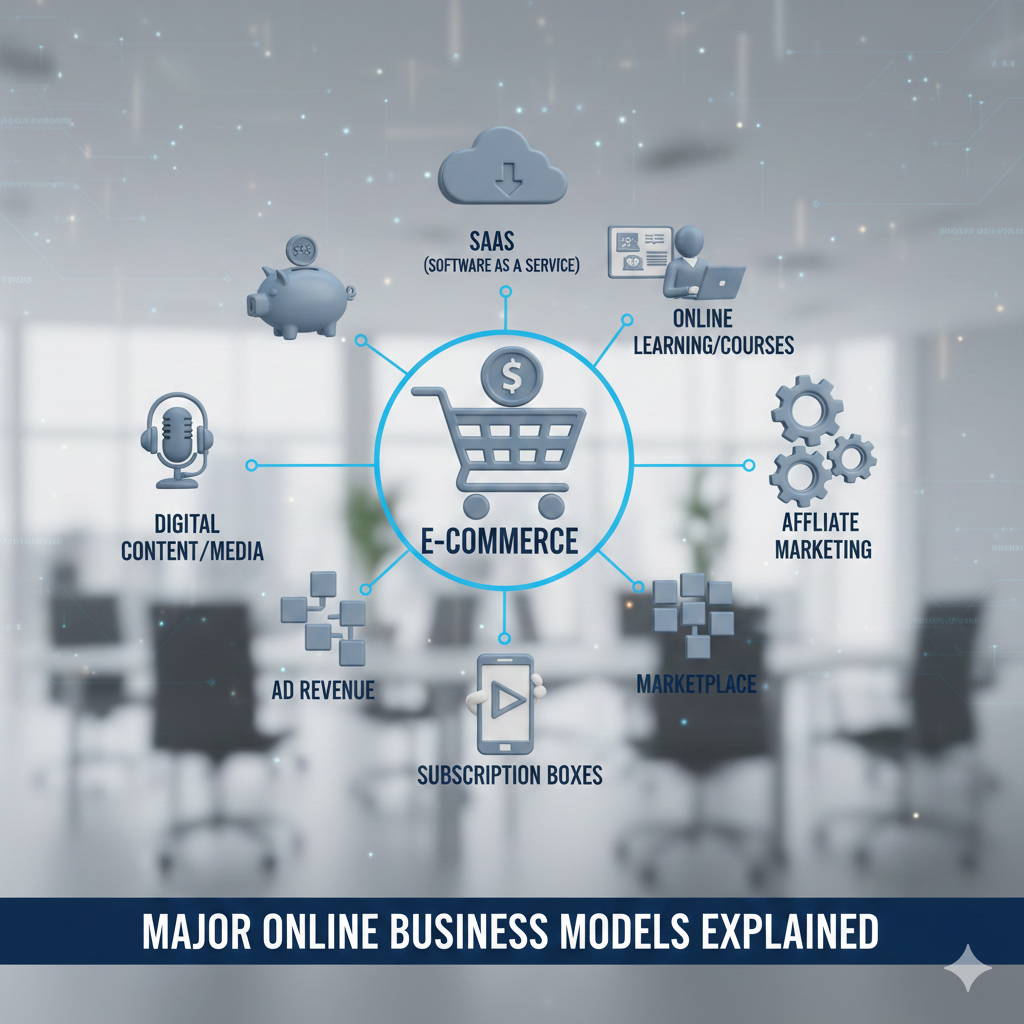
Content-Based Business Model
You create valuable content and monetize it through ads, affiliates, or sponsorships.
Examples:
Blogs
Educational YouTube channels
Niche information websites
youtube
https://www.youtube.com/watch?v=U9hZkz8pZKQ
(How content-based online businesses work)
Best for people who prefer writing, teaching, or explaining.
Service-Based Business Model
You sell time or expertise to clients.
Examples:
Freelancing
Consulting
Coaching
This model earns faster but requires active involvement.
Digital Product Business Model
You create products once and sell them repeatedly.
Examples:
Courses
Templates
Toolkits
Works best after validating demand.
Subscription or Membership Model
Users pay recurring fees for access or value.
Examples:
Communities
Learning platforms
Tools or resources
Stability increases with retention.
Marketplace or Platform Model
You connect buyers and sellers.
Examples:
Job boards
Listing platforms
This model scales well but is complex to build.
Comparison Table: Models vs Fit
| Business Model | Startup Cost | Time to Income | Scalability | Best For |
| Content-Based | Very Low | Slow | Very High | Patient creators |
| Service-Based | Low | Fast | Medium | Action-oriented |
| Digital Products | Medium | Medium | High | Teachers/builders |
| Subscription | Medium | Medium | High | Community builders |
| Marketplace | High | Slow | Very High | System thinkers |
Common Beginner Mistakes and Fixes
Choosing a Model Just Because It’s Popular
Fix: Choose based on skills and patience level.
Mixing Too Many Models Early
Fix: Start with one clear model.
Ignoring Personal Strengths
Fix: Build around what you already do well.
[Expert Warning]
A great idea with the wrong business model will still fail.
Information Gain: Model–Person Fit Beats Idea Quality (SERP Gap)
Most articles rank business models by profitability. That’s incomplete.
From real experience:
Average ideas with the right model succeed
Great ideas with the wrong model fail
When the business model fits your habits, consistency becomes easy—and consistency beats brilliance. This insight is rarely highlighted in top-ranking content.
Real-World Scenario: Same Idea, Different Models
Two people want to teach a skill.
One builds a blog and monetizes slowly.
The other offers coaching and earns quickly.
Both succeed—because they chose models aligned with their strengths. The idea stayed the same; the model changed everything.
[Pro Tip]
Ask yourself: Do I prefer creating assets, serving clients, or building systems?
Tools That Support Different Business Models
Content management systems
Email and audience tools
Payment and checkout platforms
Community and support tools
Choose tools that match your model—not tools just because others use them.
FAQs
Q1: What is the best online business model for beginners?
Content and service-based models are the safest.
Q2: Can I change business models later?
Yes, many businesses evolve over time.
Q3: Which model scales the most?
Content, digital products, and marketplaces.
Q4: Are subscription models risky?
Only if retention is ignored.
Q5: Do I need one model only?
Start with one, then expand later.
Q6: Why do some models feel harder than others?
Because they may not fit your strengths
Conclusion
Online business success depends less on ideas and more on choosing the right model. When beginners align business models with their skills, patience, and working style, progress becomes sustainable. Don’t chase what looks profitable—choose what you can execute consistently. The right model turns effort into momentum.
Internal LInk
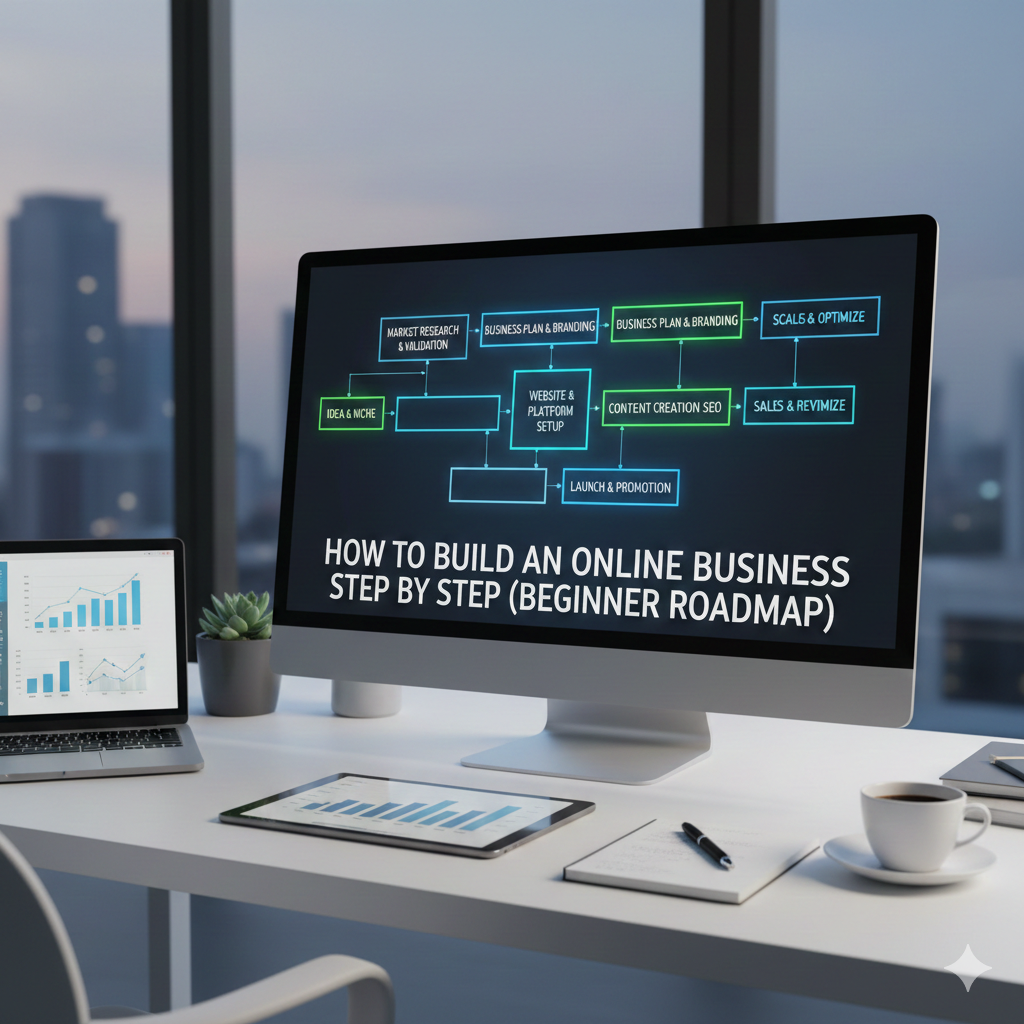
How to Build an Online Business Step by Step (Beginner Roadmap) – earnfuel.com